

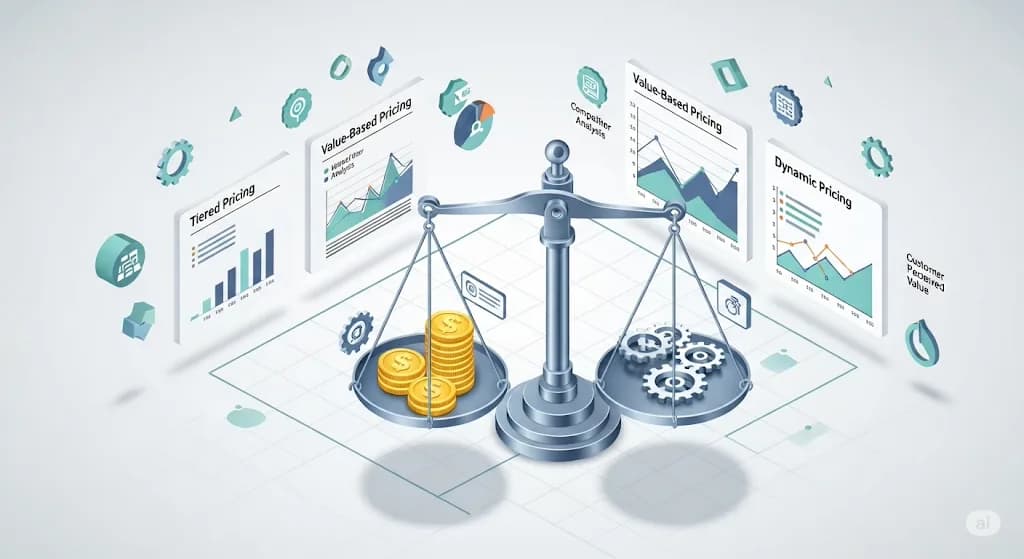
Value-Based Pricing
Unlock the true potential of your product by aligning price with perceived customer value rather than just costs.
The 5-Step Framework
Identify Segments
Recognize that different customer groups perceive value differently.
Determine Alternative
Understand the "next best alternative" your customers would buy.
Calculate Diff. Value
Quantify the specific value of your unique features.
Assess Total Value
Add differentiation value to the reference price.
Set Price
Price below total economic value but above your costs.
Pricing Tactics
stairs Good-Better-Best
Create value ladders (tiers) that appeal to different customer budget and value segments.
verified Feature-Based
Charge for specific capabilities or add-ons that deliver distinct value to users.
flag Outcome-Based
Price according to results achieved (e.g., ROI, savings) rather than inputs.
data_usage Usage-Based
Align price directly with consumption volume or utilization levels.
subscription Subscription
Exchange high upfront costs for recurring payments and ongoing value delivery.
cases Real-World Implementations
Salesforce CRM
Tiered Pricing Pioneer
Pioneered value-based pricing in cloud software by offering multiple editions (Essentials, Professional, Enterprise). Each tier delivers progressively more value.
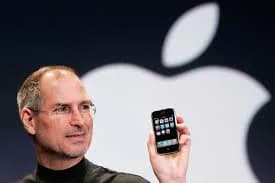
Apple iPhone
Brand & Design Value
Prices at premium levels based on perceived brand value, design excellence, and ecosystem integration, reflecting emotional and functional value.

Rolls-Royce
"Power by the Hour"
Transformed from selling engines to charging based on flight hours. An outcome-based model aligning price with reliability.
Value Perception Evolves
- trending_downMarket MaturityProducts become commoditized over time.
- memoryTechnological AdvancementNew capabilities shift what is considered "standard".
- psychologyCustomer SophisticationLearning curves change how customers evaluate value.
Adaptive Strategies
- check_circle Regularly reassess value perceptions.
- check_circle Adjust pricing granularity for segments.
- check_circle Introduce new features to maintain differentiation.
- check_circle Use value-based promotions strategically.
- check_circle Communicate value improvements clearly.
Ready to test your knowledge?
Review the flashcards or jump straight into the quiz.
translatePenjelasan dalam Bahasa Indonesiaexpand_more
Strategi harga berbasis nilai (value-based pricing) diterapkan melalui kerangka lima langkah: identifikasi segmen, tentukan next best alternative, hitung nilai diferensiasi, nilai total, lalu tetapkan harga. Aturan penetapan harganya: di bawah total economic value namun di atas biaya. Taktik pendukungnya meliputi Good-Better-Best, feature-based, outcome-based, usage-based, dan subscription pricing.
- check_circleLima langkah: identifikasi segmen, tentukan next best alternative, hitung differentiated value, jumlahkan ke reference price, lalu set price.
- check_circleAturan penetapan harga: di bawah total economic value tetapi di atas biaya Anda.
- check_circleTaktik: Good-Better-Best tiers, feature-based, outcome-based (ROI/penghematan), usage-based (volume konsumsi), dan subscription.
- check_circleSalesforce mempelopori tiered pricing cloud dengan edisi Essentials, Professional, dan Enterprise bernilai meningkat.
- check_circleApple memetapkan harga premium berdasarkan nilai merek dan desain; Rolls-Royce menagih berbasis jam terbang (Power by the Hour).
- check_circlePersepsi nilai berubah karena komoditisasi pasar, kemajuan teknologi, dan semakin canggihnya pelanggan; tinjau ulang harga secara berkala.
helpPertanyaan Umum (FAQ)
Apa saja lima langkah kerangka value-based pricing?
Mulailah dengan mengidentifikasi segmen pelanggan, lalu pahami next best alternative yang akan dibeli pelanggan. Kuantifikasi nilai diferensiasi fitur unik Anda, tambahkan ke harga referensi untuk mendapat nilai total, lalu tetapkan harga di bawah nilai ekonomi total namun di atas biaya.
Apa perbedaan outcome-based dan usage-based pricing?
Outcome-based menetapkan harga berdasarkan hasil yang dicapai pelanggan, misalnya ROI atau penghematan, bukan masukan. Usage-based menyelaraskan harga langsung dengan volume konsumsi atau tingkat utilisasi pelanggan.
Bagaimana contoh Power by the Hour dari Rolls-Royce?
Rolls-Royce bertransformasi dari sekadar menjual mesin menjadi menagih biaya berdasarkan jam terbang pesawat. Model outcome-based ini menyelaraskan harga dengan keandalan hasil yang benar-benar dinikmati pelanggan.
Mengapa persepsi nilai pelanggan perlu ditinjau ulang secara berkala?
Produk dapat terkomoditisasi seiring kematangan pasar, kemajuan teknologi menggeser standar, dan pelanggan semakin canggih menilai nilai. Tanpa peninjauan rutin, harga Anda bisa tertinggal dari nilai yang benar-benar Anda berikan.