

Technology for Ancillary Revenue
Integrated systems turn scattered add-on sales into a managed, measurable revenue stream.
layersThe Ancillary Tech Stack
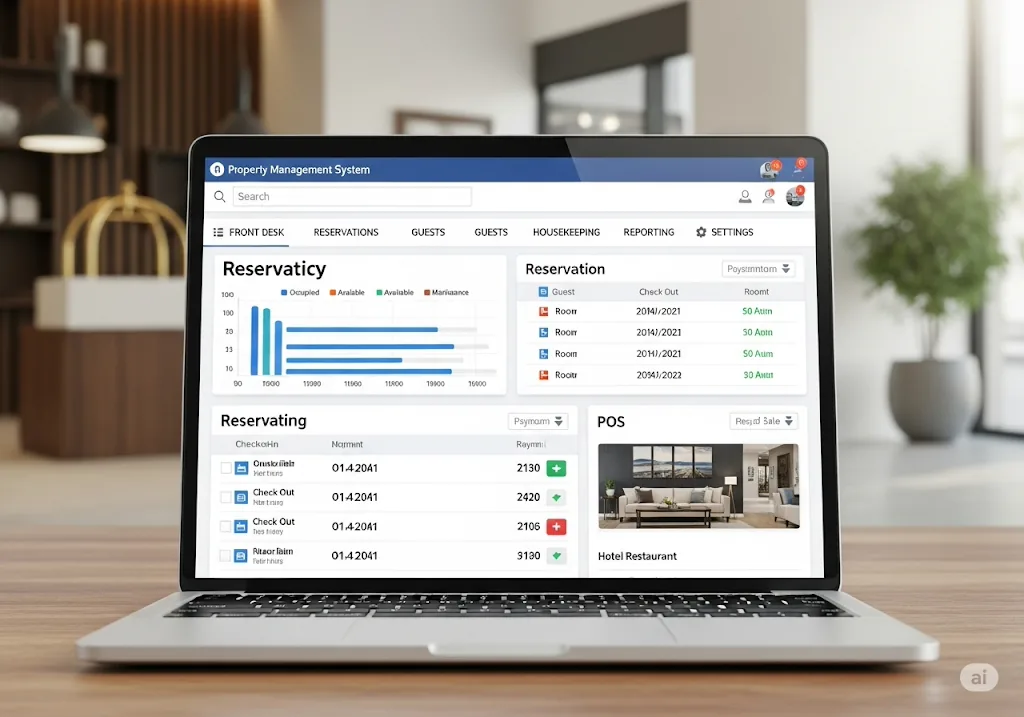
Ancillary technology is a system of connected parts. The PMS targets the offer, the booking engine and upsell platforms sell it, the POS and mobile ordering capture the spend, and the CRM turns guests into repeat buyers:
1. PMS
The guest record and stay dates that target every offer - who is coming, when, and in which room type.
2. POS Integration
Outlet spend attached to the room and profile - dinner, spa, and bar become data, not paper receipts.
3. Upsell Platforms
Automated pre-arrival and check-in upgrade offers that reach every guest without adding desk workload.
4. Booking Engine Add-Ons
Ancillaries sold inside the booking flow - breakfast, parking, and late checkout attached at the moment of highest intent.
5. CRM & Marketing
Segmented campaigns built from preference and spend data - the right offer to the right guest list.
6. QR & Mobile Ordering
In-stay menus, spa booking, and room service from the guest phone - a salesperson in every pocket.
hubWhy Integration Is the Prize
A spa treatment charged to the room should appear on the folio, the guest profile, and the attach-rate report automatically. When the POS talks to the PMS, one transaction updates everything: the bill is accurate, the profile grows richer, and the metrics assemble themselves.
Disconnected systems tell a different story. Staff reconcile charges by hand, outlet spend never reaches the guest profile, and offers launch with no way to measure what they sold. The result is manual work, lost data, and unmeasurable offers.
Integration is the prize because it turns anecdotes into metrics. Once every ancillary transaction flows into one guest record, the revenue team can manage add-ons with the same rigor as rooms.
codeBuild vs Buy
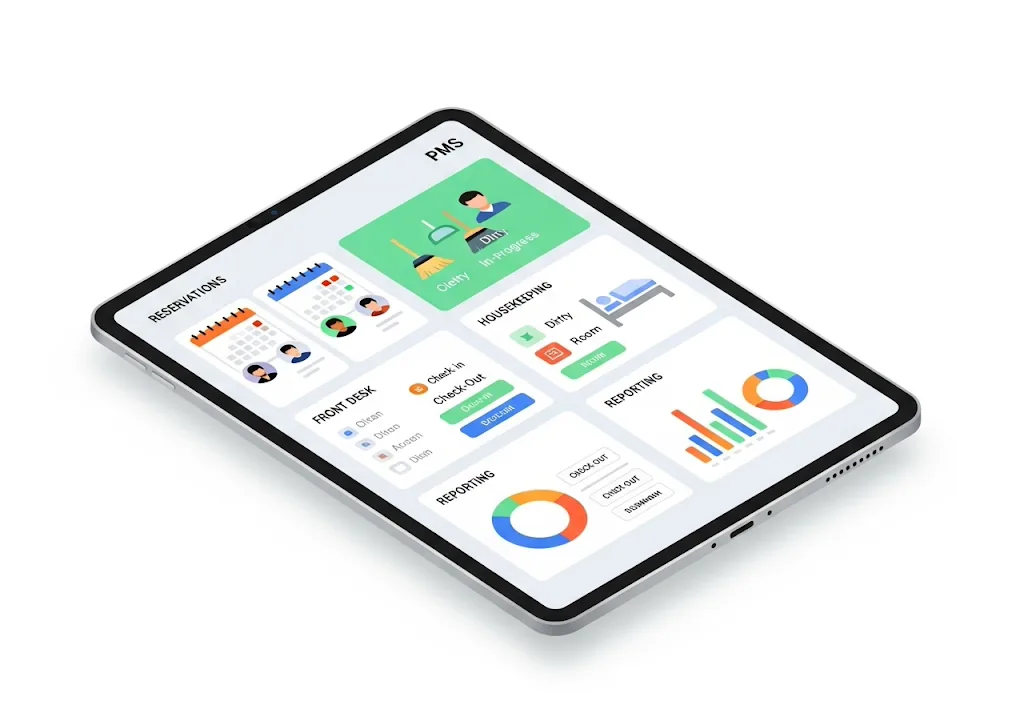
Most hotels face a fork: build ancillary tooling in-house on top of the PMS, or buy a specialized platform. The honest comparison is about speed, control, and total cost:
codeBuild In-House
Full control over features and data flows - but slow to deliver, dependent on developer capacity, and costly to maintain as systems evolve.
shopping_bagBuy Specialized
Proven flows, integrations, and support - live in weeks rather than quarters, at a predictable monthly cost and with less room for customization.
Start with one: automate the single highest-value offer first - usually pre-arrival upgrades - prove the return, then expand. Big-bang ancillary platforms die in committee.
translatePenjelasan dalam Bahasa Indonesiaexpand_more
Teknologi pendapatan ancillary tersusun sebagai satu tumpukan saling terhubung: PMS menyimpan profil tamu untuk menargetkan penawaran, booking engine dan platform upsell menjualnya, POS serta pemesanan mobile menangkap belanja, dan CRM mengubah tamu menjadi pembeli berulang. Integrasi adalah hadiahnya - satu transaksi spa otomatis mengalir ke folio, profil tamu, dan laporan attach rate. Keputusan membangun sendiri atau membeli platform menimbang kecepatan, kendali, dan biaya total.
- check_circleTech stack: PMS (penargetan), integrasi POS (data belanja outlet), platform upsell, add-on booking engine, CRM, dan QR/mobile ordering.
- check_circleSaat POS terhubung PMS, satu transaksi memperbarui folio, memperkaya profil tamu, dan merakit metrik secara otomatis.
- check_circleSistem terputus berarti rekonsiliasi manual, data belanja yang tak sampai profil, dan penawaran yang tak terukur hasil jualnya.
- check_circleIntegrasi mengubah anekdot menjadi metrik sehingga tim pendapatan bisa mengelola add-on serigor kamar.
- check_circleBuild in-house memberi kendali penuh tetapi lambat dan mahal dirawat; buy specialized hidup dalam hitungan minggu dengan biaya bulanan terprediksi.
- check_circleMulai dari satu: otomasi penawaran bernilai tertinggi dulu - biasanya upgrade pre-arrival - buktikan return, lalu perluas.
helpPertanyaan Umum (FAQ)
Komponen apa saja dalam tech stack ancillary hotel?
Enam komponen utama: PMS sebagai sumber profil dan tanggal menginap, integrasi POS untuk menyerap belanja outlet, platform upsell otomatis, add-on di booking engine, CRM untuk kampanye tersegmentasi, serta QR dan mobile ordering sebagai penjual di saku tamu. Semuanya bekerja sebagai satu sistem, bukan alat lepas.
Mengapa integrasi sistem begitu penting bagi ancillary?
Integrasi membuat satu transaksi - misalnya spa yang dibebankan ke kamar - otomatis muncul di folio, profil tamu, dan laporan attach rate. Tanpa integrasi, staf merekonsiliasi manual, data belanja tak sampai profil, dan penawaran berjalan tanpa bisa diukur hasil jualnya.
Kapan hotel sebaiknya build atau buy teknologi ancillary?
Membangun sendiri memberi kendali penuh atas fitur dan aliran data tetapi lambat, bergantung kapasitas developer, dan mahal dirawat. Membeli platform khusus sudah teruji dan bisa hidup dalam hitungan minggu dengan biaya bulanan terprediksi, namun ruang kustomisasinya lebih sempit.
Bagaimana strategi memulai otomasi ancillary yang realistis?
Mulai dari satu penawaran bernilai tertinggi - biasanya upgrade pre-arrival - buktikan returnnya, lalu perluas. Proyek ancillary big-bang umumnya mati di ruang rapat.