

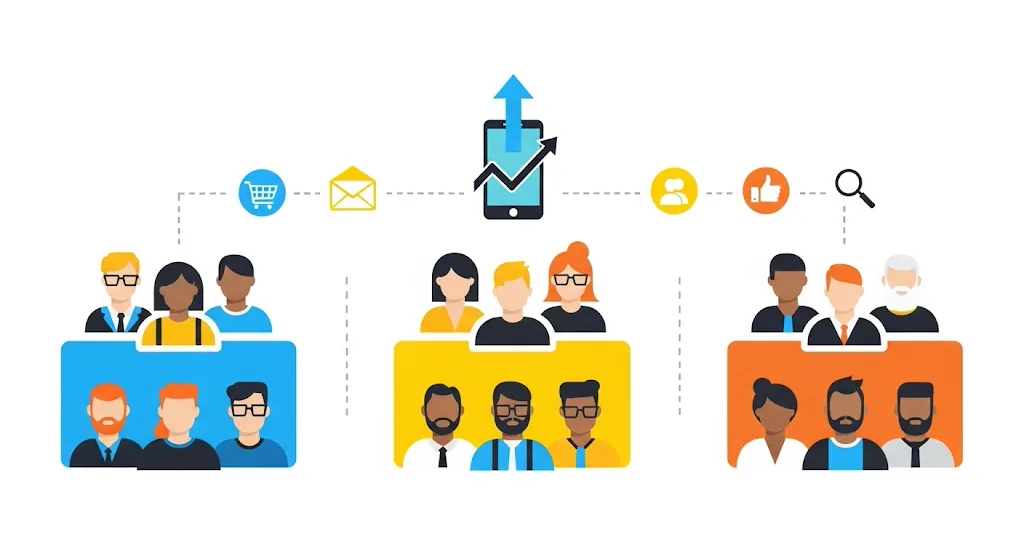
Introduction to Advanced Customer Segmentation
Every pricing, marketing and distribution decision improves the moment you stop treating guests as one crowd.
segmentWhat Segmentation Really Is
Segmentation divides the hotel's customer base into groups that think, book, and spend differently. Instead of one rate, one offer, and one message for the whole crowd, each group can be priced, offered, and addressed deliberately.
A segment is a group of customers defined by shared characteristics and by a similar response to price and promotion. If two groups react differently to the same discount, they are different segments - whatever their labels claim.
Treating guests as one crowd makes every decision a compromise: rates average down, offers miss their mark, and budget leaks to people who were never going to book. Segmenting turns those same decisions into precise, targeted moves.

compare_arrowsFrom Basic to Advanced
Most hotels already segment - they just do it crudely. The PMS dropdown stamps every booking with a label such as corporate, leisure, or group at the moment of booking, and the label never changes.
Advanced segmentation rebuilds those groups from behavior, value, and needs - and keeps rebuilding them as guests stay, click, and spend. The difference is not cosmetic: it decides whether segments describe the past or predict the next booking.
labelBasic Segmentation
The PMS dropdown: corporate, leisure, group. Assigned at booking and static ever after - it only describes who guests are on paper.
insightsAdvanced Segmentation
Behavioral, value, and needs-based groups built from data. Dynamic - updating with every stay - and predictive of what guests will do next.
view_moduleSix Pillars of Advanced Segmentation
Behavioral
What guests do: booking window, channel choice, and spend patterns across stays.
Value
What guests are worth: RFM scoring and lifetime-value tiers that rank the base.
Needs-Based
What guests want: convenience, price, experience, or status - and in which order.
Demographic & Psychographic
Who guests are: life stage, lifestyle, and values that shape travel choices.
Trip Purpose
Why they travel: business, leisure, bleisure, or family - each with distinct rate behavior.
Geographic
Where guests come from and how they book: source markets, devices, and pathways.
The bottom line: segmentation is not a marketing luxury - it is the engine behind price differentiation, channel strategy, offer design, and budget allocation. Advanced segmentation simply makes that engine data-driven.
translatePenjelasan dalam Bahasa Indonesiaexpand_more
Segmentasi pelanggan (customer segmentation) membagi basis pelanggan hotel menjadi kelompok-kelompok yang berpikir, memesan, dan membelanjakan uang secara berbeda. Segmen adalah kelompok dengan karakteristik sama dan respons serupa terhadap harga serta promosi. Segmentasi lanjutan membangun kembali kelompok tersebut dari data perilaku, nilai, dan kebutuhan sehingga mampu memprediksi pemesanan berikutnya, bukan sekadar mendeskripsikan masa lalu.
- check_circleDefinisi segmen: kelompok dengan karakteristik bersama dan respons serupa terhadap harga; dua kelompok yang bereaksi berbeda adalah segmen berbeda.
- check_circleSegmentasi dasar: label statis PMS seperti corporate, leisure, dan group yang ditempel saat booking dan tidak pernah diperbarui.
- check_circleSegmentasi lanjutan: kelompok perilaku, nilai, dan kebutuhan yang dibangun dari data serta diperbarui setiap kali tamu menginap.
- check_circleEnam pilar: behavioral, value, needs-based, demographic & psychographic, trip purpose, dan geographic.
- check_circleSegmentasi bukan kemewahan pemasaran; ialah mesin di balik price differentiation, strategi channel, desain penawaran, dan alokasi budget.
helpPertanyaan Umum (FAQ)
Apa itu segmentasi pelanggan hotel?
Segmentasi pelanggan membagi basis pelanggan hotel menjadi kelompok yang berpikir, memesan, dan membelanjakan uang secara berbeda, sehingga tiap kelompok bisa diberi harga, penawaran, dan pesan tersendiri. Segmen sejati didefinisikan oleh respons serupa terhadap harga dan promosi, bukan sekadar label administratif.
Apa perbedaan segmentasi dasar dan segmentasi lanjutan?
Segmentasi dasar mengandalkan label statis di PMS seperti corporate atau leisure yang ditempel saat booking dan tidak pernah berubah. Segmentasi lanjutan membangun ulang kelompok dari perilaku, nilai, dan kebutuhan, lalu terus memperbaruinya sehingga mampu memprediksi pemesanan berikutnya.
Mengapa segmentasi penting dalam revenue management?
Tanpa segmentasi, semua keputusan menjadi kompromi: harga turun rata-rata, penawaran meleset, dan budget bocor ke orang yang tidak akan memesan. Segmentasi menjadikan keputusan pricing, distribusi, dan pemasaran bergerak presisi serta berbasis data.