


The Break-Even Point
The pivotal moment where total revenue equals total costs—the threshold between viability and profit.
The Concept
Break-Even Point (BEP) represents the minimum performance threshold for viability. It is the specific level of sales volume where your business neither makes a profit nor incurs a loss.
- check_circleSales below BEP = Loss
- check_circleSales above BEP = Profit
The Formula
Break-Even Point (Units)
Fixed Costs / (Price - Variable Cost)
Break-Even Point (Revenue)
Fixed Costs / CM Ratio
calculateInteractive Simulator
Edit inputs to see changesRent, salaries, insurance
Supplies, commissions, utilities
Contribution Margin
$120.00
Per unit sold
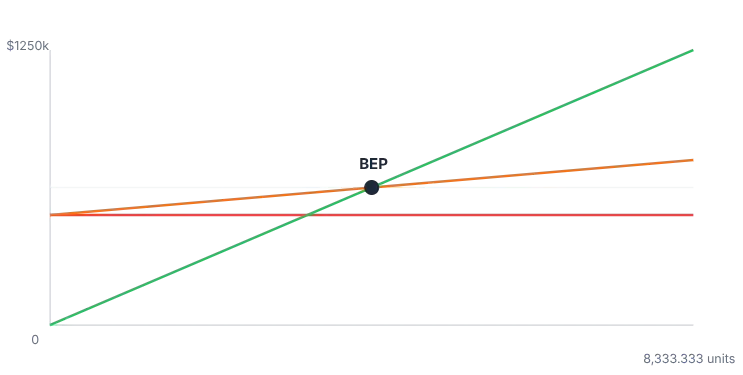
Break-Even Analysis Chart
Visualizing where Revenue meets Total Costs
Break-Even Point
4,167 Units
$625,000 Revenue

Real-World Application: The Hotel Scenario
Consider the simulation default values above, which represent a small hotel:
- Fixed Costs: $500,000 / year
- Room Rate: $150
- Var. Cost: $30
Insight: To break even, this hotel needs to sell 4,167 room nights. If the hotel has 100 rooms, that's only 11.4% occupancy (4,167 / 36,500 total available nights).
Pricing Floors
Identifies the absolute minimum rate needed. Pricing below this guarantees losses regardless of volume.
Product Launch
Crucial for checking if realistic sales volumes can exceed break-even points before launching new services.
Discount Analysis
Helps determine how much volume increase is strictly needed to offset the margin loss from a discount.
translatePenjelasan dalam Bahasa Indonesiaexpand_more
Titik impas (break-even point, BEP) adalah tingkat volume penjualan saat total pendapatan tepat sama dengan total biaya, sehingga usaha tidak untung maupun rugi. Di bawah BEP usaha merugi, di atasnya mulai menghasilkan laba. Konsep ini menjadi ambang minimum kelayakan yang wajib dipahami sebelum menetapkan harga, meluncurkan produk, atau memberikan diskon.
- check_circleRumus BEP (unit): Fixed Costs / (Price − Variable Cost); BEP (revenue): Fixed Costs / CM Ratio.
- check_circlePenjualan di bawah BEP berarti rugi; melewati BEP berarti setiap unit tambahan menghasilkan laba.
- check_circleContoh hotel: fixed cost $500.000/tahun, harga kamar $150, variabel cost $30, maka contribution margin $120 per kamar.
- check_circleHasilnya BEP 4.167 room nights; bagi hotel 100 kamar itu hanya occupancy 11,4% dari 36.500 malam tersedia.
- check_circleAplikasi strategis: menentukan pricing floor, menguji kelayakan peluncuran produk, dan menganalisis volume untuk menutup diskon.
helpPertanyaan Umum (FAQ)
Bagaimana cara menghitung break-even point sebuah usaha?
Bagi total fixed costs dengan contribution margin per unit, yaitu harga jual dikurangi variabel cost per unit: BEP = Fixed Costs / (Price − Variable Cost). Contohnya biaya tetap $500.000 dengan margin $120 per kamar menghasilkan 4.167 room nights untuk mencapai impas.
Apa itu contribution margin dan perannya dalam analisis impas?
Contribution margin adalah selisih harga per unit dan biaya variabel per unit, misalnya kamar $150 dengan variabel cost $30 menghasilkan margin $120. Margin inilah yang menutup biaya tetap; semakin besar marginnya, semakin sedikit unit yang dibutuhkan untuk mencapai titik impas.
Mengapa analisis break-even penting untuk keputusan harga hotel?
Analisis ini menetapkan pricing floor: harga di bawah tingkat tertentu menjamin kerugian berapa pun volumenya. Ia juga menunjukkan berapa tambahan occupancy yang wajib dihasilkan agar sebuah diskon tidak menggerus margin, serta menguji apakah volume realistis dapat melampaui BEP sebelum peluncuran layanan baru.
Bagaimana menghitung BEP dalam nilai pendapatan?
Gunakan rumus Fixed Costs dibagi CM Ratio, yaitu contribution margin dinyatakan sebagai persentase harga jual. Dengan begitu Anda memperoleh target pendapatan, bukan sekadar jumlah unit, yang harus dicapai agar usaha impas.