

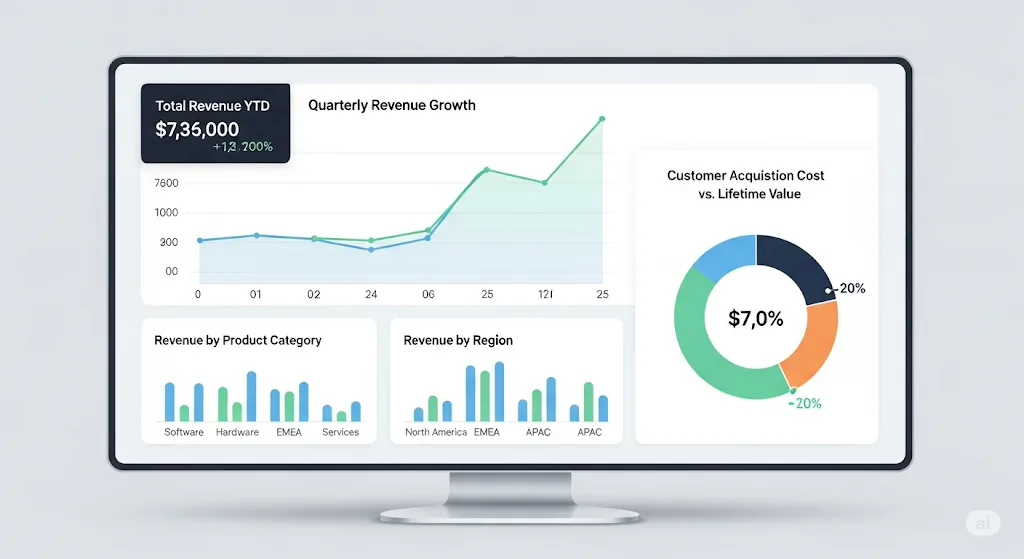
Designing the KPI Framework
A KPI framework is architecture - the right handful of metrics, laddered from desk to ownership, with targets that bite.
account_treeBuilding the Set
Start from strategy, not from software. Define three to five objectives for the property, then select one or two KPIs per objective - each with an owner, a target and a review cadence. A metric missing any of those three attachments is a statistic, not a KPI.
The KPI tree ladders up: desk-level operational KPIs feed department metrics, department metrics feed the property scorecard, and the property scorecard feeds ownership summaries. Every level should answer to the one above it.
When a desk KPI moves but the scorecard does not, the tree is diagnosing itself - either the operational metric is the wrong leading indicator, or its effect is being absorbed elsewhere. A well-built framework is an instrument for that conversation, not decoration for the meeting.
compare_arrowsKitchen Sink vs Chosen Few
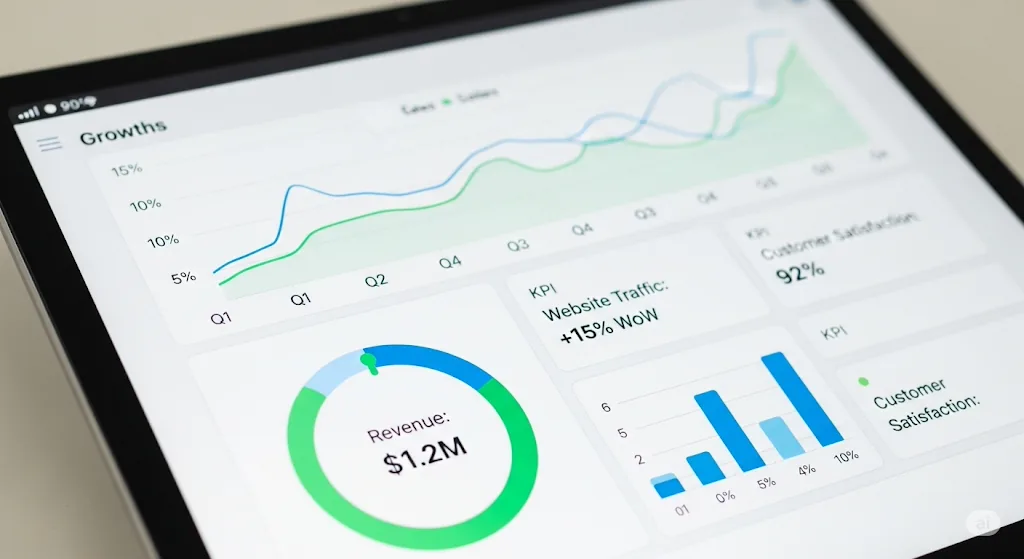
Every property system can compute hundreds of metrics. The framework designer's job is to refuse most of them - attention is the scarce resource a dashboard allocates.
grid_onKitchen Sink
Every metric the system computes, forty tiles deep. Attention is diluted across everything and accountability lands nowhere - the dashboard scrolls while decisions stall.
filter_center_focusChosen Few
Ten KPIs laddered to strategy. Each one defended in its design meeting and acted on in operation - fewer numbers, sharper conversations, faster decisions.
checklistSix Framework Rules
Six rules keep a framework honest over time - design discipline at the start, governance discipline afterward:
1. Strategy First
KPIs derive from objectives, never from whatever data happens to be available in the system.
2. Target Setting
Every KPI carries budget, last-year and stretch references - no number is read without context.
3. Tiered Views
Daily operations, weekly tactics, monthly strategy - the same facts at the altitude each meeting needs.
4. Single Definition
One written formula per KPI, used identically across every report, department and system.
5. Review Ritual
A KPI without a meeting where it is discussed is a statistic. Put it on an agenda or retire it.
6. Pruning Season
Twice a year, retire metrics nobody has acted on - let evidence, not habit, keep tiles alive.
The Ten-Metric Audit: if the property dashboard had a paywall, which ten metrics would management still buy? That thought experiment is the framework design session - and everything not on the list must argue its way back in.
translatePenjelasan dalam Bahasa Indonesiaexpand_more
Kerangka KPI adalah arsitektur metrik yang diturunkan dari strategi: tiga hingga lima tujuan properti, masing-masing diwakili satu atau dua KPI dengan pemilik, target, dan ritme evaluasi. Pohon KPI menaikkan metrik meja operasional hingga scorecard kepemilikan. Struktur ini menjaga fokus dan akuntabilitas keputusan.
- check_circleMulai dari strategi: 3-5 tujuan properti, lalu 1-2 KPI per tujuan dengan owner, target, dan cadence.
- check_circleKPI tree bertingkat: KPI meja operasional menopang metrik departemen, scorecard properti, hingga ringkasan pemilik.
- check_circleSetiap KPI memakai satu definisi tertulis yang sama di semua laporan, departemen, dan sistem.
- check_circleTiered view: operasional harian, taktis mingguan, strategis bulanan; fakta sama pada ketinggian berbeda.
- check_circleRitme evaluasi wajib: KPI tanpa rapat yang membahasnya hanyalah statistik; pangkas dua kali setahun.
- check_circleAudit sepuluh metrik: jika dashboard berbayar, sepuluh metrik apa yang masih dibeli manajemen?
helpPertanyaan Umum (FAQ)
Bagaimana cara menyusun kerangka KPI hotel?
Tetapkan tiga hingga lima tujuan strategis properti, lalu pilih satu atau dua KPI per tujuan dengan pemilik, target, dan cadence evaluasi. Susun pohon KPI sehingga metrik meja operasional mengalir ke scorecard properti dan ringkasan pemilik.
Apa perbedaan metrik biasa dan KPI yang baik?
Metrik menjadi KPI ketika berasal dari tujuan strategis, dimiliki orang yang ditunjuk, dan dibaca pada konteks target serta ritme tertentu. Tanpa ketiga ikatan itu, angka hanyalah statistik yang memenuhi dashboard.
Mengapa dashboard dengan ratusan metrik berbahaya?
Perhatian adalah sumber daya langka yang dialokasikan dashboard; ratusan tile membuat fokus terdilusi dan akuntabilitas menguap. Lebih baik sepuluh KPI yang diladder ke strategi dan benar-benar ditindaklanjuti daripada puluhan tile yang tidak pernah dibaca.
Kapan metrik perlu dikeluarkan dari dashboard?
Lakukan pemangkasan dua kali setahun untuk memensiunkan metrik yang tidak pernah memicu tindakan. Gunakan eksperimen paywall: bila hanya sepuluh metrik yang masih dibeli manajemen, sisanya harus membuktikan diri kembali masuk.